Semantic integration is the process of interrelating information from diverse sources, for example calendars and to do lists, email archives, presence information (physical, psychological, and social), documents of all sorts, contacts (including social graphs), search results, and advertising and marketing relevance derived from them. In this regard, semantics focuses on the organization of and action upon information by acting as an intermediary between heterogeneous data sources, which may conflict not only by structure but also context or value. == Applications and methods == In enterprise application integration (EAI), semantic integration can facilitate or even automate the communication between computer systems using metadata publishing. Metadata publishing potentially offers the ability to automatically link ontologies. One approach to (semi-)automated ontology mapping requires the definition of a semantic distance or its inverse, semantic similarity and appropriate rules. Other approaches include so-called lexical methods, as well as methodologies that rely on exploiting the structures of the ontologies. For explicitly stating similarity/equality, there exist special properties or relationships in most ontology languages. OWL, for example has "owl:equivalentClass", "owl:equivalentProperty" and "owl:sameAs". Eventually system designs may see the advent of composable architectures where published semantic-based interfaces are joined together to enable new and meaningful capabilities. These could predominately be described by means of design-time declarative specifications, that could ultimately be rendered and executed at run-time. Semantic integration can also be used to facilitate design-time activities of interface design and mapping. In this model, semantics are only explicitly applied to design and the run-time systems work at the syntax level. This "early semantic binding" approach can improve overall system performance while retaining the benefits of semantic driven design. == Semantic integration situations == From the industry use case, it has been observed that the semantic mappings were performed only within the scope of the ontology class or the datatype property. These identified semantic integrations are (1) integration of ontology class instances into another ontology class without any constraint, (2) integration of selected instances in one ontology class into another ontology class by the range constraint of the property value and (3) integration of ontology class instances into another ontology class with the value transformation of the instance property. Each of them requires a particular mapping relationship, which is respectively: (1) equivalent or subsumption mapping relationship, (2) conditional mapping relationship that constraints the value of property (data range) and (3) transformation mapping relationship that transforms the value of property (unit transformation). Each identified mapping relationship can be defined as either (1) direct mapping type, (2) data range mapping type or (3) unit transformation mapping type. == KG vs. RDB approaches == In the case of integrating supplemental data source, KG(Knowledge graph) formally represents the meaning involved in information by describing concepts, relationships between things, and categories of things. These embedded semantics with the data offer significant advantages such as reasoning over data and dealing with heterogeneous data sources. The rules can be applied on KG more efficiently using graph query. For example, the graph query does the data inference through the connected relations, instead of repeated full search of the tables in relational database. KG facilitates the integration of new heterogeneous data by just adding new relationships between existing information and new entities. This facilitation is emphasized for the integration with existing popular linked open data source such as Wikidata.org. SQL query is tightly coupled and rigidly constrained by datatype within the specific database and can join tables and extract data from tables, and the result is generally a table, and a query can join tables by any columns which match by datatype. SPARQL query is the standard query language and protocol for Linked Open Data on the web and loosely coupled with the database so that it facilitates the reusability and can extract data through the relations free from the datatype, and not only extract but also generate additional knowledge graph with more sophisticated operations(logic: transitive/symmetric/inverseOf/functional). The inference based query (query on the existing asserted facts without the generation of new facts by logic) can be fast comparing to the reasoning based query (query on the existing plus the generated/discovered facts based on logic). The information integration of heterogeneous data sources in traditional database is intricate, which requires the redesign of the database table such as changing the structure and/or addition of new data. In the case of semantic query, SPARQL query reflects the relationships between entities in a way that aligned with human's understanding of the domain, so the semantic intention of the query can be seen on the query itself. Unlike SPARQL, SQL query, which reflects the specific structure of the database and derived from matching the relevant primary and foreign keys of tables, loses the semantics of the query by missing the relationships between entities. Below is the example that compares SPARQL and SQL queries for medications that treats "TB of vertebra". SELECT ?medication WHERE { ?diagnosis a example:Diagnosis . ?diagnosis example:name “TB of vertebra” . ?medication example:canTreat ?diagnosis . } SELECT DRUG.medID FROM DIAGNOSIS, DRUG, DRUG_DIAGNOSIS WHERE DIAGNOSIS.diagnosisID=DRUG_DIAGNOSIS.diagnosisID AND DRUG.medID=DRUG_DIAGNOSIS.medID AND DIAGNOSIS.name=”TB of vertebra” == Examples == The Pacific Symposium on Biocomputing has been a venue for the popularization of the ontology mapping task in the biomedical domain, and a number of papers on the subject can be found in its proceedings.
Embodied agent
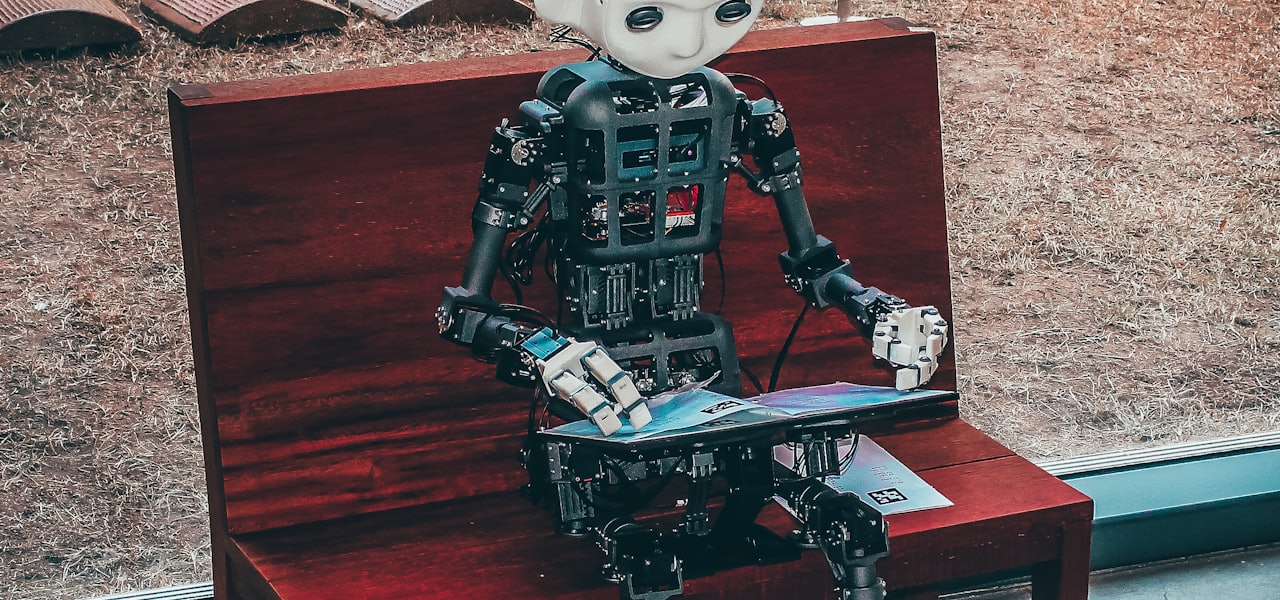
In artificial intelligence, an embodied agent, also sometimes referred to as an interface agent, is an intelligent agent that interacts with the environment through a physical body within that environment. Agents that are represented graphically with a body, for example a human or a cartoon animal, are also called embodied agents, although they have only virtual, not physical, embodiment. A branch of artificial intelligence focuses on empowering such agents to interact autonomously with human beings and the environment. Mobile robots are one example of physically embodied agents; Ananova and Microsoft Agent are examples of graphically embodied agents. Embodied conversational agents are embodied agents (usually with a graphical front-end as opposed to a robotic body) that are capable of engaging in conversation with one another and with humans employing the same verbal and nonverbal means that humans do (such as gesture, facial expression, and so forth). == Embodied conversational agents == Embodied conversational agents are a form of intelligent user interface. Graphically embodied agents aim to unite gesture, facial expression and speech to enable face-to-face communication with users, providing a powerful means of human-computer interaction. == Advantages == Face-to-face communication allows communication protocols that give a much richer communication channel than other means of communicating. It enables pragmatic communication acts such as conversational turn-taking, facial expression of emotions, information structure and emphasis, visualization and iconic gestures, and orientation in a three-dimensional environment. This communication takes place through both verbal and non-verbal channels such as gaze, gesture, spoken intonation and body posture. Research has found that users prefer a non-verbal visual indication of an embodied system's internal state to a verbal indication, demonstrating the value of additional non-verbal communication channels. As well as this, the face-to-face communication involved in interacting with an embodied agent can be conducted alongside another task without distracting the human participants, instead improving the enjoyment of such an interaction. Furthermore, the use of an embodied presentation agent results in improved recall of the presented information. Embodied agents also provide a social dimension to the interaction. Humans willingly ascribe social awareness to computers, and thus interaction with embodied agents follows social conventions, similar to human to human interactions. This social interaction both raises the believably and perceived trustworthiness of agents, and increases the user's engagement with the system. Rickenberg and Reeves found that the presence of an embodied agent on a website increased the level of user trust in that website, but also increased users' anxiety and affected their performance, as if they were being watched by a real human. Another effect of the social aspect of agents is that presentations given by an embodied agent are perceived as being more entertaining and less difficult than similar presentations given without an agent. Research shows that perceived enjoyment, followed by perceived usefulness and ease of use, is the major factor influencing user adoption of embodied agents. A study in January 2004 by Byron Reeves at Stanford demonstrated how digital characters could "enhance online experiences" through explaining how virtual characters essentially add a sense of familiarity to the user experience and make it more approachable. This increase in likability in turn helps make the products better, which benefits both the end users and those creating the product. === Applications === The rich style of communication that characterizes human conversation makes conversational interaction with embodied conversational agents ideal for many non-traditional interaction tasks. A familiar application of graphically embodied agents is computer games; embodied agents are ideal for this setting because the richer communication style makes interacting with the agent enjoyable. Embodied conversational agents have also been used in virtual training environments, portable personal navigation guides, interactive fiction and storytelling systems, interactive online characters and automated presenters and commentators. Major virtual assistants like Siri, Amazon Alexa and Google Assistant do not come with any visual embodied representation, which is believed to limit the sense of human presence by users. The U.S. Department of Defense utilizes a software agent called SGT STAR on U.S. Army-run Web sites and Web applications for site navigation, recruitment and propaganda purposes. Sgt. Star is run by the Army Marketing and Research Group, a division operated directly from The Pentagon. Sgt. Star is based upon the ActiveSentry technology developed by Next IT, a Washington-based information technology services company. Other such bots in the Sgt. Star "family" are utilized by the Federal Bureau of Investigation and the Central Intelligence Agency for intelligence gathering purposes.
Data grid
A data grid is an architecture or set of services that allows users to access, modify and transfer extremely large amounts of geographically distributed data for research purposes. Data grids make this possible through a host of middleware applications and services that pull together data and resources from multiple administrative domains and then present it to users upon request. The data in a data grid can be located at a single site or multiple sites where each site can be its own administrative domain governed by a set of security restrictions as to who may access the data. Likewise, multiple replicas of the data may be distributed throughout the grid outside their original administrative domain and the security restrictions placed on the original data for who may access it must be equally applied to the replicas. Specifically developed data grid middleware is what handles the integration between users and the data they request by controlling access while making it available as efficiently as possible. == Middleware == Middleware provides all the services and applications necessary for efficient management of datasets and files within the data grid while providing users quick access to the datasets and files. There is a number of concepts and tools that must be available to make a data grid operationally viable. However, at the same time not all data grids require the same capabilities and services because of differences in access requirements, security and location of resources in comparison to users. In any case, most data grids will have similar middleware services that provide for a universal name space, data transport service, data access service, data replication and resource management service. When taken together, they are key to the data grids functional capabilities. === Universal namespace === Since sources of data within the data grid will consist of data from multiple separate systems and networks using different file naming conventions, it would be difficult for a user to locate data within the data grid and know they retrieved what they needed based solely on existing physical file names (PFNs). A universal or unified name space makes it possible to create logical file names (LFNs) that can be referenced within the data grid that map to PFNs. When an LFN is requested or queried, all matching PFNs are returned to include possible replicas of the requested data. The end user can then choose from the returned results the most appropriate replica to use. This service is usually provided as part of a management system known as a Storage Resource Broker (SRB). Information about the locations of files and mappings between the LFNs and PFNs may be stored in a metadata or replica catalogue. The replica catalogue would contain information about LFNs that map to multiple replica PFNs. === Data transport service === Another middleware service is that of providing for data transport or data transfer. Data transport will encompass multiple functions that are not just limited to the transfer of bits, to include such items as fault tolerance and data access. Fault tolerance can be achieved in a data grid by providing mechanisms that ensures data transfer will resume after each interruption until all requested data is received. There are multiple possible methods that might be used to include starting the entire transmission over from the beginning of the data to resuming from where the transfer was interrupted. As an example, GridFTP provides for fault tolerance by sending data from the last acknowledged byte without starting the entire transfer from the beginning. The data transport service also provides for the low-level access and connections between hosts for file transfer. The data transport service may use any number of modes to implement the transfer to include parallel data transfer where two or more data streams are used over the same channel or striped data transfer where two or more steams access different blocks of the file for simultaneous transfer to also using the underlying built-in capabilities of the network hardware or specifically developed protocols to support faster transfer speeds. The data transport service might optionally include a network overlay function to facilitate the routing and transfer of data as well as file I/O functions that allow users to see remote files as if they were local to their system. The data transport service hides the complexity of access and transfer between the different systems to the user so it appears as one unified data source. === Data access service === Data access services work hand in hand with the data transfer service to provide security, access controls and management of any data transfers within the data grid. Security services provide mechanisms for authentication of users to ensure they are properly identified. Common forms of security for authentication can include the use of passwords or Kerberos (protocol). Authorization services are the mechanisms that control what the user is able to access after being identified through authentication. Common forms of authorization mechanisms can be as simple as file permissions. However, need for more stringent controlled access to data is done using Access Control Lists (ACLs), Role-Based Access Control (RBAC) and Tasked-Based Authorization Controls (TBAC). These types of controls can be used to provide granular access to files to include limits on access times, duration of access to granular controls that determine which files can be read or written to. The final data access service that might be present to protect the confidentiality of the data transport is encryption. The most common form of encryption for this task has been the use of SSL while in transport. While all of these access services operate within the data grid, access services within the various administrative domains that host the datasets will still stay in place to enforce access rules. The data grid access services must be in step with the administrative domains access services for this to work. === Data replication service === To meet the needs for scalability, fast access and user collaboration, most data grids support replication of datasets to points within the distributed storage architecture. The use of replicas allows multiple users faster access to datasets and the preservation of bandwidth since replicas can often be placed strategically close to or within sites where users need them. However, replication of datasets and creation of replicas is bound by the availability of storage within sites and bandwidth between sites. The replication and creation of replica datasets is controlled by a replica management system. The replica management system determines user needs for replicas based on input requests and creates them based on availability of storage and bandwidth. All replicas are then cataloged or added to a directory based on the data grid as to their location for query by users. In order to perform the tasks undertaken by the replica management system, it needs to be able to manage the underlying storage infrastructure. The data management system will also ensure the timely updates of changes to replicas are propagated to all nodes. ==== Replication update strategy ==== There are a number of ways the replication management system can handle the updates of replicas. The updates may be designed around a centralized model where a single master replica updates all others, or a decentralized model, where all peers update each other. The topology of node placement may also influence the updates of replicas. If a hierarchy topology is used then updates would flow in a tree like structure through specific paths. In a flat topology it is entirely a matter of the peer relationships between nodes as to how updates take place. In a hybrid topology consisting of both flat and hierarchy topologies updates may take place through specific paths and between peers. ==== Replication placement strategy ==== There are a number of ways the replication management system can handle the creation and placement of replicas to best serve the user community. If the storage architecture supports replica placement with sufficient site storage, then it becomes a matter of the needs of the users who access the datasets and a strategy for placement of replicas. There have been numerous strategies proposed and tested on how to best manage replica placement of datasets within the data grid to meet user requirements. There is not one universal strategy that fits every requirement the best. It is a matter of the type of data grid and user community requirements for access that will determine the best strategy to use. Replicas can even be created where the files are encrypted for confidentiality that would be useful in a research project dealing with medical files. The following section contains several strategies for replica placement. ===== Dynamic replication ===== Dynam
Comparison of OLAP servers
The following tables compare general and technical information for a number of online analytical processing (OLAP) servers. Please see the individual products articles for further information. == General information == == Data storage modes == == APIs and query languages == APIs and query languages OLAP servers support. == OLAP distinctive features == A list of OLAP features that are not supported by all vendors. All vendors support features such as parent-child, multilevel hierarchy, drilldown. == System limits == == Security == == Operating systems == The OLAP servers can run on the following operating systems: Note (1):The server availability depends on Java Virtual Machine not on the operating system == Support information ==
Interplanetary Internet
The interplanetary Internet is a conceived computer network in space, consisting of a set of network nodes that can communicate with each other. These nodes are the planet's orbiters and landers, and the Earth ground stations. For example, the orbiters collect the scientific data from the Curiosity rover on Mars through near-Mars communication links, transmit the data to Earth through direct links from the Mars orbiters to the Earth ground stations via the NASA Deep Space Network, and finally the data routed through Earth's internal internet. Interplanetary communication is greatly delayed by interplanetary distances, as data transmission can only go as fast as the speed of light, so a new set of protocols and technologies that are tolerant to large delays and errors are required. The interplanetary Internet has been envisioned as a store and forward network of internets that is often disconnected, has a wireless backbone fraught with error-prone links and delays ranging from tens of minutes to even hours, even when there is a connection. As of 2024 agencies and companies working towards bringing the network to fruition include NASA, ESA, SpaceX and Blue Origin. == Challenges and reasons == In the core implementation of Interplanetary Internet, satellites orbiting a planet communicate to other planet's satellites. Simultaneously, these planets revolve around the Sun with long distances, and thus many challenges face the communications. The reasons and the resultant challenges are: The motion and long distances between planets: The interplanetary communication is greatly delayed due to the interplanetary distances and the motion of the planets. The delay is variable and long, ranging from a couple of minutes (Earth-to-Mars), to a couple of hours (Pluto-to-Earth), depending on their relative positions. The interplanetary communication also suspends due to the solar conjunction, when the sun's radiation hinders the direct communication between the planets. As such, the communication characterizes lossy links and intermittent link connectivity. Low embeddable payload: Satellites can only carry a small payload, which poses challenges to the power, mass, size, and cost for communication hardware design. An asymmetric bandwidth would be the result of this limitation. This asymmetry reaches ratios up to 1000:1 as downlink:uplink bandwidth portion. Absence of fixed infrastructure: The graph of participating nodes in a specific planet-to-planet communication keeps changing over time, due to the constant motion. The routes of the planet-to-planet communication are planned and scheduled rather than being opportunistic. The Interplanetary Internet design must address these challenges to operate successfully and achieve good communication with other planets. It also must use the few available resources efficiently in the system. == Development == Space communication technology has steadily evolved from expensive, one-of-a-kind point-to-point architectures, to the re-use of technology on successive missions, to the development of standard protocols agreed upon by space agencies of many countries. This last phase has gone on since 1982 through the efforts of the Consultative Committee for Space Data Systems (CCSDS), a body composed of the major space agencies of the world. It has 11 member agencies, 32 observer agencies, and over 119 industrial associates. The evolution of space data system standards has gone on in parallel with the evolution of the Internet, with conceptual cross-pollination where fruitful, but largely as a separate evolution. Since the late 1990s, familiar Internet protocols and CCSDS space link protocols have integrated and converged in several ways; for example, the successful FTP file transfer to Earth-orbiting STRV 1B on January 2, 1996, which ran FTP over the CCSDS IPv4-like Space Communications Protocol Specifications (SCPS) protocols. Internet Protocol use without CCSDS has taken place on spacecraft, e.g., demonstrations on the UoSAT-12 satellite, and operationally on the Disaster Monitoring Constellation. Having reached the era where networking and IP on board spacecraft have been shown to be feasible and reliable, a forward-looking study of the bigger picture was the next phase. The Interplanetary Internet study at NASA's Jet Propulsion Laboratory (JPL) was started by a team of scientists at JPL led by internet pioneer Vinton Cerf and the late Adrian Hooke. Cerf was appointed as a distinguished visiting scientist at JPL in 1998, while Hooke was one of the founders and directors of CCSDS. While IP-like SCPS protocols are feasible for short hops, such as ground station to orbiter, rover to lander, lander to orbiter, probe to flyby, and so on, delay-tolerant networking is needed to get information from one region of the Solar System to another. It becomes apparent that the concept of a region is a natural architectural factoring of the Interplanetary Internet. A region is an area where the characteristics of communication are the same. Region characteristics include communications, security, the maintenance of resources, perhaps ownership, and other factors. The Interplanetary Internet is a "network of regional internets". What is needed then, is a standard way to achieve end-to-end communication through multiple regions in a disconnected, variable-delay environment using a generalized suite of protocols. Examples of regions might include the terrestrial Internet as a region, a region on the surface of the Moon or Mars, or a ground-to-orbit region. The recognition of this requirement led to the concept of a "bundle" as a high-level way to address the generalized Store-and-Forward problem. Bundles are an area of new protocol development in the upper layers of the OSI model, above the Transport Layer with the goal of addressing the issue of bundling store-and-forward information so that it can reliably traverse radically dissimilar environments constituting a "network of regional internets". Delay-tolerant networking (DTN) was designed to enable standardized communications over long distances and through time delays. At its core is the Bundle Protocol (BP), which is similar to the Internet Protocol, or IP, that serves as the heart of the Internet here on Earth. The big difference between the regular Internet Protocol (IP) and the Bundle Protocol is that IP assumes a seamless end-to-end data path, while BP is built to account for errors and disconnections — glitches that commonly plague deep-space communications. Bundle Service Layering, implemented as the Bundling protocol suite for delay-tolerant networking, will provide general-purpose delay-tolerant protocol services in support of a range of applications: custody transfer, segmentation and reassembly, end-to-end reliability, end-to-end security, and end-to-end routing among them. The Bundle Protocol was first tested in space on the UK-DMC satellite in 2008. An example of one of these end-to-end applications flown on a space mission is the CCSDS File Delivery Protocol (CFDP), used on the Deep Impact comet mission. CFDP is an international standard for automatic, reliable file transfer in both directions. CFDP should not be confused with Coherent File Distribution Protocol, which has the same acronym and is an IETF-documented experimental protocol for rapidly deploying files to multiple targets in a highly networked environment. In addition to reliably copying a file from one entity (such as a spacecraft or ground station) to another entity, CFDP has the capability to reliably transmit arbitrarily small messages defined by the user, in the metadata accompanying the file, and to reliably transmit commands relating to file system management that are to be executed automatically on the remote end-point entity (such as a spacecraft) upon successful reception of a file. == Protocol == The Consultative Committee for Space Data Systems (CCSDS) packet telemetry standard defines the protocol used for the transmission of spacecraft instrument data over the deep-space channel. Under this standard, an image or other data sent from a spacecraft instrument is transmitted using one or more packets. === CCSDS packet definition === A packet is a block of data with length that can vary between successive packets, ranging from 7 to 65,542 bytes, including the packet header. Packetized data is transmitted via frames, which are fixed-length data blocks. The size of a frame, including frame header and control information, can range up to 2048 bytes. Packet sizes are fixed during the development phase. Because packet lengths are variable but frame lengths are fixed, packet boundaries usually do not coincide with frame boundaries. === Telecom processing notes === Data in a frame is typically protected from channel errors by error-correcting codes. Even when the channel errors exceed the correction capability of the error-correcting code, the presence of errors is nearly always detected by the e
NeoPaint
NeoPaint is a raster graphics editor for Windows and MS-DOS. It supports several file formats including JPEG, GIF, BMP, PNG, and TIFF. The developer, NeoSoft, advertises NeoPaint as "being simple enough for use by children while remaining powerful enough for the purposes of advanced image editing". The first version, NeoPaint 1.0, was released in 1992 on floppy disks. It supported video modes ranging from 640x350 to 1024x768 and multiple fonts. NeoPaint 2.2 came out for MS-DOS 3.1 in 1993, with support of for 2, 16, or 256 color images in Hercules, EGA, VGA, and Super VGA modes. NeoPaint 3.1 was released in 1995 supporting 24-bit images and formats like PCX, TIFF and BMP. NeoPaint 3.2 was released in 1996. An updated version, NeoPaint 3.2a, supported the GIF file format. NeoPaint 3.2d was released in 1998. A Windows 95 version named NeoPaint for Windows v4.0 was released in 1999 supporting the PNG file format. On September 1, 2018 the program was rebranded as PixelNEO, becoming one of the VisualNEO software products. Formats such as JPEG 2000, ICO, CUR, PSD and RAW are supported.
Social network game
A social network game (sometimes simply referred to as a social media game, social gaming, or online social game) is a type of online game that is played through social networks or social media. They typically feature gamification systems with multiplayer gameplay mechanics. Social network games were originally implemented as browser games. As mobile gaming took off, the games moved to mobile as well. While they share many aspects of traditional video games, social network games often employ additional ones that make them distinct. Traditionally they are oriented to be social games and casual games. The first cross-platform "Facebook-to-Mobile" social network game was developed in 2011 by a Finnish company Star Arcade. Social network games are amongst the most popular games played in the world, with several products with tens of millions of players. (Lil) Green Patch, Happy Farm, and Mob Wars were some of the first successful games of this genre. FarmVille, Mafia Wars, Kantai Collection, and The Sims Social are more recent examples of popular social network game. Major companies that made or published social network games include Zynga, Wooga and Bigpoint Games. == Demographics == As of 2010, it was reported that 55 percent of the social network gaming demographic in the United States consisted of women while in the United Kingdom, women made up nearly 60 percent of the demographic. In addition, most social gamers were around the 30 to 59 age range, with the average social gamer being 43 years old. Social gaming may appeal more to the older demographic because it is free, easier to advance through in a short period, does not involve as much violence as traditional video games, and is easier to grasp. Other games target certain demographics that use social media, such as Pot Farm creating a community by involving elements of cannabis subculture in its gameplay. == Technology and platforms == A social network video game is a client-server application. The client in the web era was implemented with a mix of web technologies like Flash, HTML5, PHP and JavaScript. When mobile games moved to mobile, social game front ends were developed using mobile platform technologies like Java, Objective-C, Swift and C++. The back end was a mix of programming languages and systems, including PHP, Ruby, C++ and go. Where social network video games diverged from traditional game development was the combination of real-time analytics to continuously optimize game mechanics to drive growth, revenue, and engagement. == Distinct features == The following table outlines common characteristics of social games, mentioned by Björk at the 2010 GCO Games Convention Online: A social network game may employ any of the following features: asynchronous gameplay, which allows rules to be resolved without needing players to play at the same time. gamification, which video game mechanics such as achievements and points are applied to those experienced when playing games in order to motivate and engage users. community, as one of the most distinct features of social video games is in leveraging the player's social network. Quests or game goals may only be possible if a player "shares" with friends connected by the social network hosting the game or gets them to play, as well as "neighbors" or "allies". a lack of victory conditions: there are generally no victory conditions since most developers count on users playing their games often. The game never ends and no one is ever declared winner. Instead, many casual games have "quests" or "missions" for players to complete. This is not true for board game-like social games, such as Scrabble. a virtual currency which players usually must purchase with real-world money. With the in-game currency, players can buy upgrades that would otherwise take much longer to earn through in-game achievements. In many cases, some upgrades are only available with the virtual currency. == Engagement strategies == Since social network games are often less challenging than console games and they have relatively shorter game play, they use different techniques to stretch game play and tools to retain users. Continuous goals: The games assign specific goals for users to achieve. As they advance in the game, the goals become more challenging and time-consuming. They also provide frequent feedback with their performance. Every action will translate towards a certain goal that will be used to attain higher gaming capitals. Gaming capitals: Players are encouraged to earn different badges, trophies, and accolades that indicate their progress and accomplishments. Some achievements are unlocked just by advancing in the game while others may significantly alter the rationale behind the game and require extensive investment from players. The ways of gaining gaming capital are not limited to playing games but the games-related productive activities that are appreciated in the player's social circle too. By accumulating gaming capitals, they provide an intrinsic benefit to gamers as there is an avenue to boost their accomplishment and showcase their expertise of the game. The achievements are visible to their network of friends. Gaming capitals are a way for developers to increase replay value provides extended play time, and players get more value from the game. Motivation for collecting gaming capitals: 1. Legitimization: refers to society's willingness to approve or condone certain behavior. Collecting is about channeling one's materialistic desires into more meaningful pursuits. Game achievements serve a similar purpose, allowing players to justify the hours spent playing the game. 2. Self-extension: Gathering and controlling meaningful objects or experiences can work to gain one an improved sense of self. The collector's goal to complete a collection is symbolically about completing the self too. Events timed to real world: Popular games such as Dragon City and Wild Ones require users to wait a certain time period before their "energy bars" replenish. Without energy, they are unable to conduct any form of action. Gamers are forced to wait and return after their energy replenishes to continue playing. == Monetization == Social network games frequently monetize based on virtual good transactions, but other games are emerging that utilize newer economic models. === Virtual goods === Gamers will be able to purchase in game items like power-ups, avatar accessories, or decorative items users purchase within the game itself. This is realized by monetize products that do not technically exist. Virtual goods account for over 90% of all revenue generated by the world's top social game developers. Designers optimize user experience through additional gameplay, missions, and quests, without having to worry about overhead or unused stock. == Advertising == The following are common ways of advertising in social network games: === Banner advertisements === As banner ads within social networks tend to be where ad response is low, they tend to be priced at bottom-of-the-barrel CPMs of around $2. However, because social games generate so many page views, they are the biggest part of advertising revenue for the social gaming industry. === Video ads === Videos are the ad format with the most revenue per view. They tend to be higher-priced, either by CPMs ($35+ CPM in social games) or cost-per-completed-view. According to studies, video ads result in highest brand recall thus a good return on investment for advertisers. Video ads are shown either in in-game interstitials (e.g. when the game is loading a new screen) or through incentive-based advertising, i.e. you will get either an in-game reward or Facebook credits for watching an advertisement. === Product placement === A brand or product will be injected in a game in some way. Due to the variety of ways in which product placement can be accomplished in any media, and because the category is nascent, this category is not standardized at all, but some examples include branded in-game goods or even in-game quests. For example, in a game where you run a restaurant, you might be asked to collect ingredients to make a Starbucks Frappuccino, and receive in-game rewards for doing so. As these product placement deals are non-standard, they are largely charged with a production fee, which can be $350,000 to $750,000 depending on the type of placement and the popularity of the game. === Lead generation offers === Another form of advertising that is prevalent in many social games are lead generation offers. In this form of advertising, companies, usually from different industries, aim to convince players to sign up for their goods or services and in exchange, players will receive virtual gifts or advance in the game as a reward. === Sponsorship === ==== White label games ==== Applications that are built once, then individualized and licensed again and again. Developer can create a quality app focused on fun while leaving the edge